The financial world is changing fast. Tokenisation, decentralised finance and crypto are no longer ideas, they're entering mainstream conversations. More people are asking: why do we still accept the same old inefficiencies in traditional banking?
These problems aren't new. We've simply tolerated them for decades. Let's look at the biggest ones.
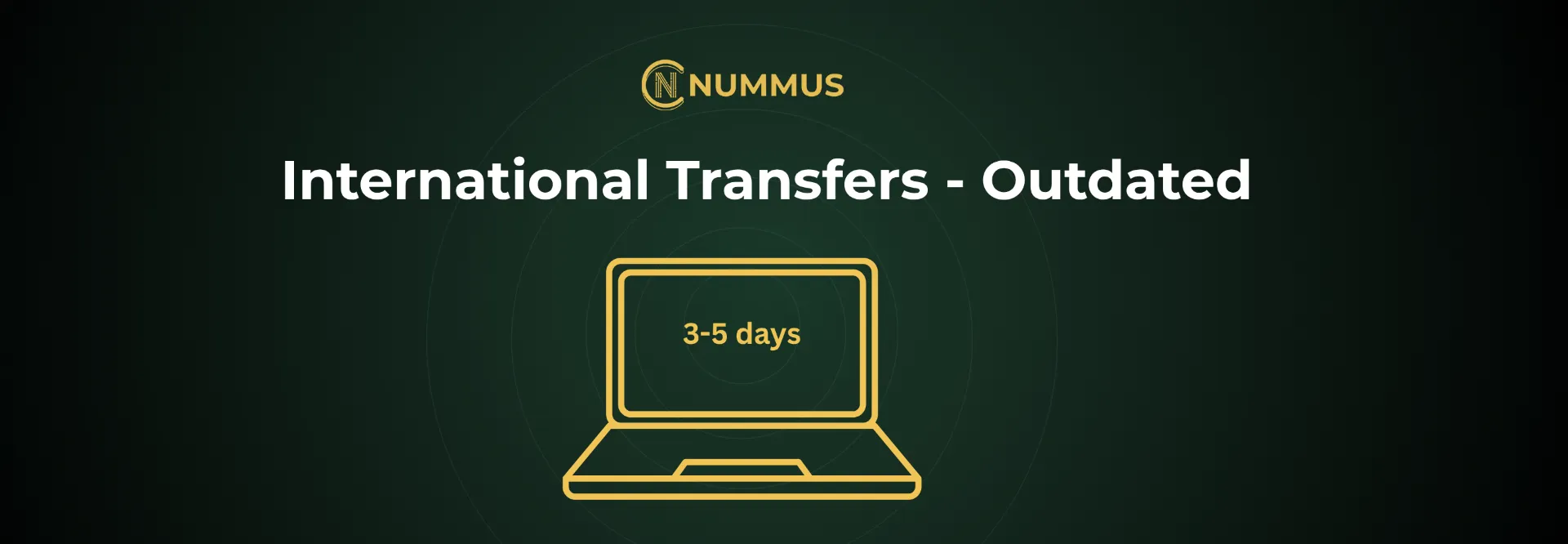
International payments still often rely on SWIFT, a system built in 1973. More than 50 years later, transfers can take 3–5 business days. Funds vanish into a chain of intermediary banks, fees pile up unpredictably and recipients frequently receive less than expected, with no clear reason why.
Have you ever waited days for money to arrive from overseas?
Does a system designed half a century ago still make sense when billions of people expect instant digital transactions every day?
Or has it stayed slow and costly because it still serves the institutions that run it?

Traditional banking isn't built for 24/7 global commerce. Even in 2026, money moves far slower than the internet. Large payments need manual approval, transactions pause for review, intermediary banks add delays, and everything stops on weekends and holidays. Many domestic transfers slow down if they hit certain limits.
For global businesses, remote workers, or anyone working across time zones: how often have delayed funds caused missed deadlines, cash-flow stress, or disrupted plans?
Why should something as basic as moving money still feel so outdated and unreliable?
Imagine this: in a room full of professionals, we asked, "Who here has had to call their bank to explain a transaction?" Almost every hand went up. It's become completely normal.
Banks regularly demand proof of source of funds, purpose of payment, counterparty details, invoices, or contracts, all under AML and KYC rules meant to stop fraud and crime. That part is understandable.
But when you're already a verified account holder and you've confirmed the transaction, why do you still have to justify how you use your own money?
Does it feel more like protection or constant surveillance?
How would your life change if you could move funds without repeated third-party questioning?

Few things are more frustrating than waking up to find your payment blocked or your account suddenly frozen, often with no warning. Your money gets locked for "review" while the bank demands more documents.
Triggers can be as simple as a large transfer, an international payment, working in a certain industry, or an AI fraud system misreading normal behavior. In that moment, your funds aren't really yours anymore.
Individuals deal with unpaid bills and emergencies without access to cash. Businesses face delayed payroll, unpaid suppliers, stalled operations, or worse.
Have you, or someone you know, ever had funds frozen for days or weeks while trying to prove everything was legitimate?
Why does the system treat you as guilty until proven innocent, especially when access to your own money feels like an unreliable privilege in 2026?

The answer isn't banks versus crypto. It's a hybrid model that actually works.
One that keeps the regulatory strength, security, and stability of traditional (especially offshore) banking, while adding crypto infrastructure for instant speed, flexibility, and true global access.
Nummus Wallet is built exactly for this moment. It combines private offshore banking features with integrated crypto wallets, seamless fiat-to-crypto conversions, virtual and physical cards for everyday spending, global ATM access, and effortless cross-border transfers, all in one compliant, secure platform.
The result: financial management without the usual delays, endless questions, or unnecessary middlemen.
Have you ever wished for a system where your money moves as fast as the internet, stays private when it should, and remains fully accessible, without choosing between old-school security and modern freedom?
This isn't disruption for the sake of it. It's practical financial infrastructure rebuilt for a borderless, always-on world, giving you the best of both systems in one easy experience.